
droits d'enregistrement bruxelles · article
Registration duties and the Brussels abatement
Everything about registration duties in the Brussels Region: 12.5% rate, €200,000 abatement, eligibility conditions and detailed calculation.
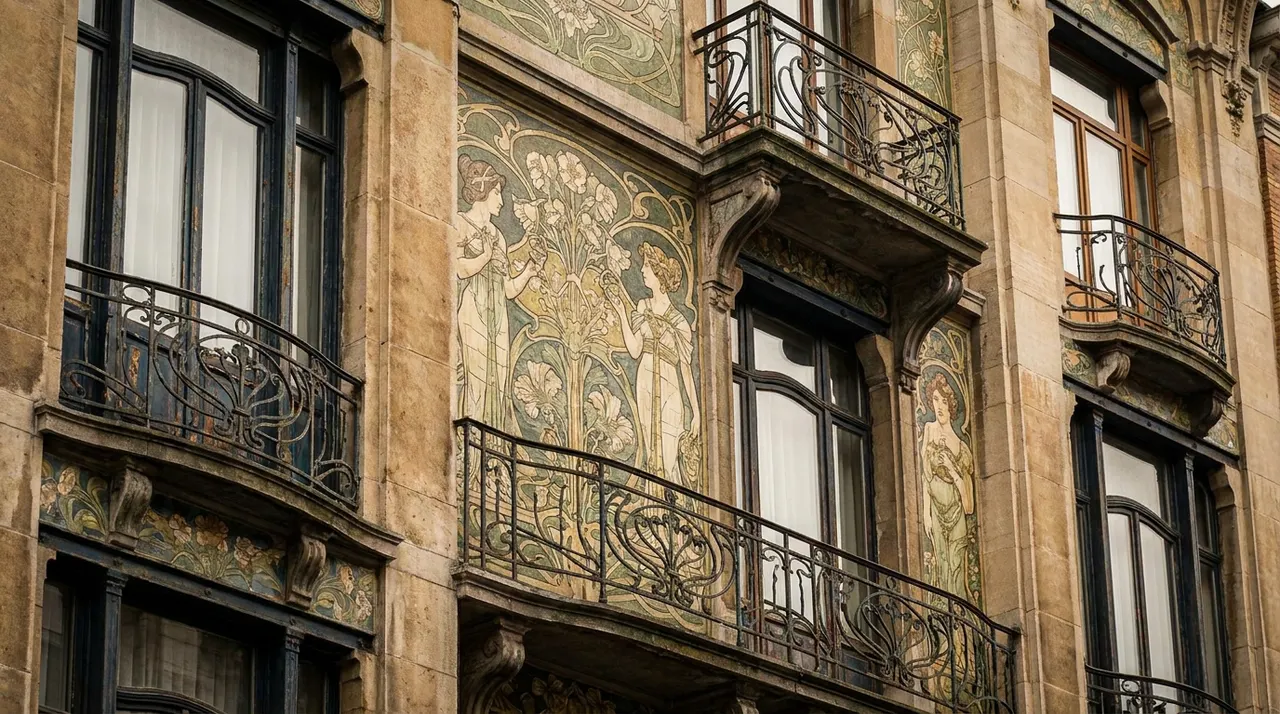
Registration duties are the main component of the acquisition costs of a Brussels property. Fixed at 12.5% of the sale price, they represent a considerable cost that the Brussels €200,000 abatement can substantially reduce for eligible buyers. This page details the mechanism, the eligibility conditions and the practical implications of this tax regime specific to the Brussels-Capital Region.
The base rate: 12.5%
In the Brussels-Capital Region, registration duties amount to 12.5% of the price stated in the deed of sale, or the market value of the property if that is higher than the agreed price. This rate is identical to that of the Walloon Region but significantly higher than the reduced rate of 3% applicable in the Flemish Region for a principal residence (since January 2022).
Base calculation (without abatement)
For a flat purchased at €350,000 in Brussels:
- Registration duties: €350,000 × 12.5% = €43,750
- Notary’s fees (statutory scale): ≈ €4,500
- Administrative and transcription costs: ≈ €1,200
- Total costs: ≈ €49,450 (14.1% of the price)
The Brussels abatement: €200,000
The principle
The Brussels abatement allows no registration duties to be paid on the first €200,000 of the acquisition price. The maximum saving is therefore €200,000 × 12.5% = €25,000.
Calculation with abatement
For the same flat at €350,000:
- Taxable base after abatement: €350,000 – €200,000 = €150,000
- Registration duties: €150,000 × 12.5% = €18,750
- Saving realised: €25,000
The impact is considerable: duties fall from €43,750 to €18,750, a reduction of 57%.
Eligibility conditions for the abatement
The abatement is subject to strict conditions, verified by the notary:
Condition 1: Principal residence
The buyer must establish their principal residence in the purchased property within 3 years of the purchase deed and maintain their domicile there for at least 5 years. Failure to comply with this condition results in repayment of the tax advantage.
Condition 2: Sole residence
The buyer must not own any other residential property, in full ownership or usufruct, at the time of the deed. If they own another property, they may benefit from the abatement provided they sell that property within 2 years.
Condition 3: Full ownership acquisition
The abatement applies only to the acquisition of full ownership (or both usufruct and bare ownership combined). The purchase of bare ownership alone does not qualify.
Condition 4: Property located in the BCR
The property must be located in one of the 19 communes of the Brussels-Capital Region. The abatement does not apply to properties in Flanders or Wallonia (those regions have their own schemes).
Condition 5: No bare land
The abatement is reserved for the acquisition of an already-built property. The purchase of a building plot or a subdivision lot does not qualify. However, an off-plan flat (VEFA) may be eligible for the portion of the price subject to registration duties.
Comparison with other Regions
| Criterion | Brussels-Capital | Flanders | Wallonia |
|---|---|---|---|
| Standard rate | 12.5% | 12% | 12.5% |
| Reduced rate (principal residence) | 12.5% (with abatement) | 3% | 12.5% (with abatement) |
| Abatement | €200,000 | — (direct reduced rate) | €20,000 |
| Maximum saving | €25,000 | variable | €2,500 |
The Brussels system is unique: it combines a high rate with a generous abatement, making it particularly advantageous for moderately to mid-priced properties (up to approximately €500,000).
Implications for buying property in Brussels
Impact on the purchase budget
The abatement considerably changes the financial equation. For a total budget of €400,000 (price plus costs), a buyer eligible for the abatement can afford a more expensive property or retain a more comfortable financial buffer.
Market value as the fiscal reference
The tax authority can review the declared price upward if it considers the stipulated price to be below the true market value of the property. A prior expert valuation can address this concern by documenting the market value of the property.
The choice between new-build and older property
The abatement applies only to registration duties, not to VAT. A new-build property is subject to 21% VAT (on the construction component) rather than registration duties (except on the land). This makes the abatement inapplicable to the major component of a new-build purchase price, which relatively favours older property for first-time buyers.
How to optimise your acquisition
Before buying, a property estimation lets you verify that the asking price is consistent with the market — an important condition for avoiding a tax reassessment and for negotiating with full information.
Contact our practice for any question relating to registration duties and the market value of a property you are considering acquiring.